

Choose the plan that fits your needs the best. Focus and be present. Leave the rest to us.
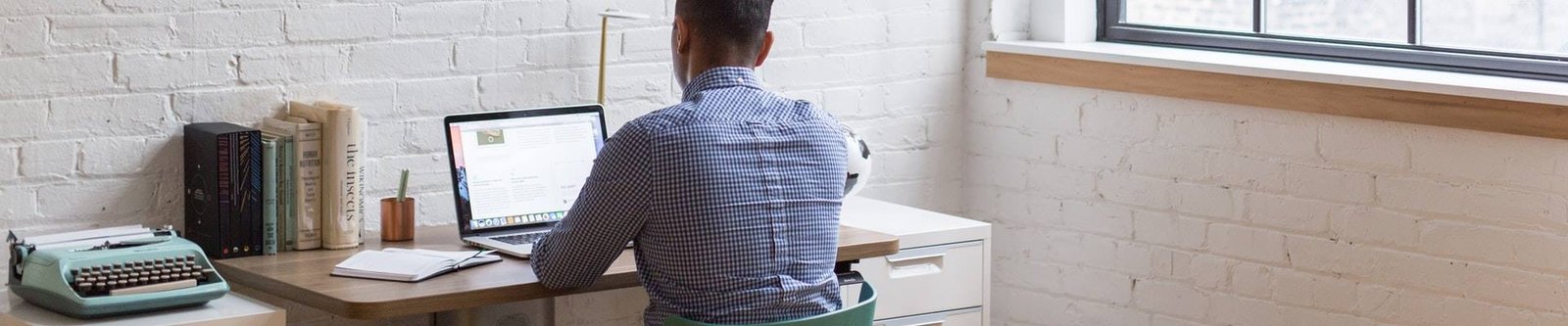
You’ve probably worked from your couch before. Maybe even from your bed (no judgment). What started as a temporary solution somewhere around 2020 quietly became a lifestyle. The line between home and work blurred, and now developers are trying to build around that blur, not fight it.
Welcome to the era of hybrid living. Where your apartment isn’t just a place to crash but a space that flexes with your day, a morning workstation, a mid-afternoon brainstorming zone, and an evening retreat.
And honestly, it makes sense.
Let’s be real: the old idea of “work-life balance” doesn’t really fit anymore. Work is life, at least part of it. The trick isn’t separation; it’s integration.
The rise of hybrid apartments reflects that shift. It’s not about designing home offices in closets anymore. It’s about rethinking entire floor plans.
Developers and designers are now creating spaces that help residents transition smoothly through their day. You can move from productivity mode to relaxation mode without switching ZIP codes.
According to an award-winning property management company in LA, tenants increasingly expect flexibility as a built-in feature, not a bonus. “The most successful buildings today,” they note, “are designed for how people actually live, multitasking, remote-working, and community-building, all under one roof.”
That’s not just smart marketing. It’s reality.
Step inside a next-gen hybrid apartment and you’ll notice something different right away: space isn’t static anymore.
Walls slide. Furniture folds. Lighting changes tone as the day moves. The design adapts to you, not the other way around.
Here’s what’s driving that shift:
Designers call it “programmatic living.” Residents call it “finally, an apartment that gets me.”
A hybrid home is a functional rhythm.
The goal is to help your day feel natural, not like you’re squeezing work into your personal space. When layouts are intuitive, your brain follows suit. You wake up, slide open a partition, and the energy shifts. You’re at work now. Later, the space softens again for dinner, reading, or pretending to watch TV while scrolling through emails.
It’s all about flow, the kind of design that quietly removes friction from your day.
One of the most interesting parts of hybrid living is how it’s reshaping not just apartments, but entire communities.
Coworking spaces like Focus Studio in San Francisco have shown how flexible, shared environments can spark creativity and connection. Hybrid living takes that idea and scales it, into buildings, neighborhoods, even cities.
We’re seeing residential complexes that blend private apartments with shared creative spaces. A few floors of units, a coworking lounge below, maybe a maker lab next door. It’s not just convenient, it’s intentional.
People don’t want to choose between community and comfort anymore. They want both. And hybrid design gives them both without forcing awkward “mixer nights.”
Let’s be honest: nobody wants to feel like they live at work. That’s where balance sneaks back into the equation, not as separation, but as smart zoning.
The best hybrid apartments do something subtle: they give each part of your life its own visual and emotional cue. Different textures, lighting temperatures, even flooring materials can help shift the mood.
The result? Work stays productive. Life stays livable. And your space doesn’t feel like a 24/7 conference room.
Some developers are even experimenting with “wellness pods”, small alcoves designed for meditation or power naps, proving that the modern apartment is as much about restoration as it is about productivity.
What started as an emergency adaptation has turned into a design revolution. Hybrid living isn’t a phase; it’s a preview of what’s coming next.
As more people freelance, consult, or work remotely, the demand for multi-functional apartments will only grow. Developers who understand that flexibility isn’t a feature, it’s a necessity, are the ones shaping the future of housing.
The good news? We’re already seeing it. Spaces that flex, adapt, and evolve with you.
Focus Studio and other innovation-driven environments are showing that when you blend work and life thoughtfully, you don’t lose either. You actually get more of both.
Choose the plan that fits your needs the best. Focus and be present. Leave the rest to us.

